Mr. Beaver
The Wild RobotMr. Beaver is the island's master builder, a pragmatic and skilled beaver whose initial suspicion of the robot Roz gives way to a working partnership that shapes the island's architecture. He is introduced as a cautious creature with a strict policy of never accepting gifts from monsters, yet he becomes the craftsman who builds Roz's home, repairs her body, and helps her shelter the island's animals through the winter. His transformation from wary skeptic to devoted collaborator marks one of the clearest arcs of trust in the story, and his practical skills prove essential to Roz's survival and acceptance on the island.
Identity and Introduction
Mr. Beaver first appears when Roz approaches the beaver pond carrying a freshly cut tree as a gift. He is immediately wary, slapping the water with his broad tail as a signal to stop, and when Roz introduces herself and Brightbill, he refuses her offering with a firm declaration: he has a strict policy of never accepting gifts from monsters. His wife, Mrs. Beaver, overrides him, insisting they cannot let a perfectly healthy birch go to waste, and this small domestic negotiation reveals Mr. Beaver's character: cautious and principled, but ultimately practical and open to persuasion when reason is presented. He is a creature of habit and craft, a builder who has constructed many lodges over the years, and his expertise becomes the foundation of his relationship with Roz.
The Construction of the Lodge
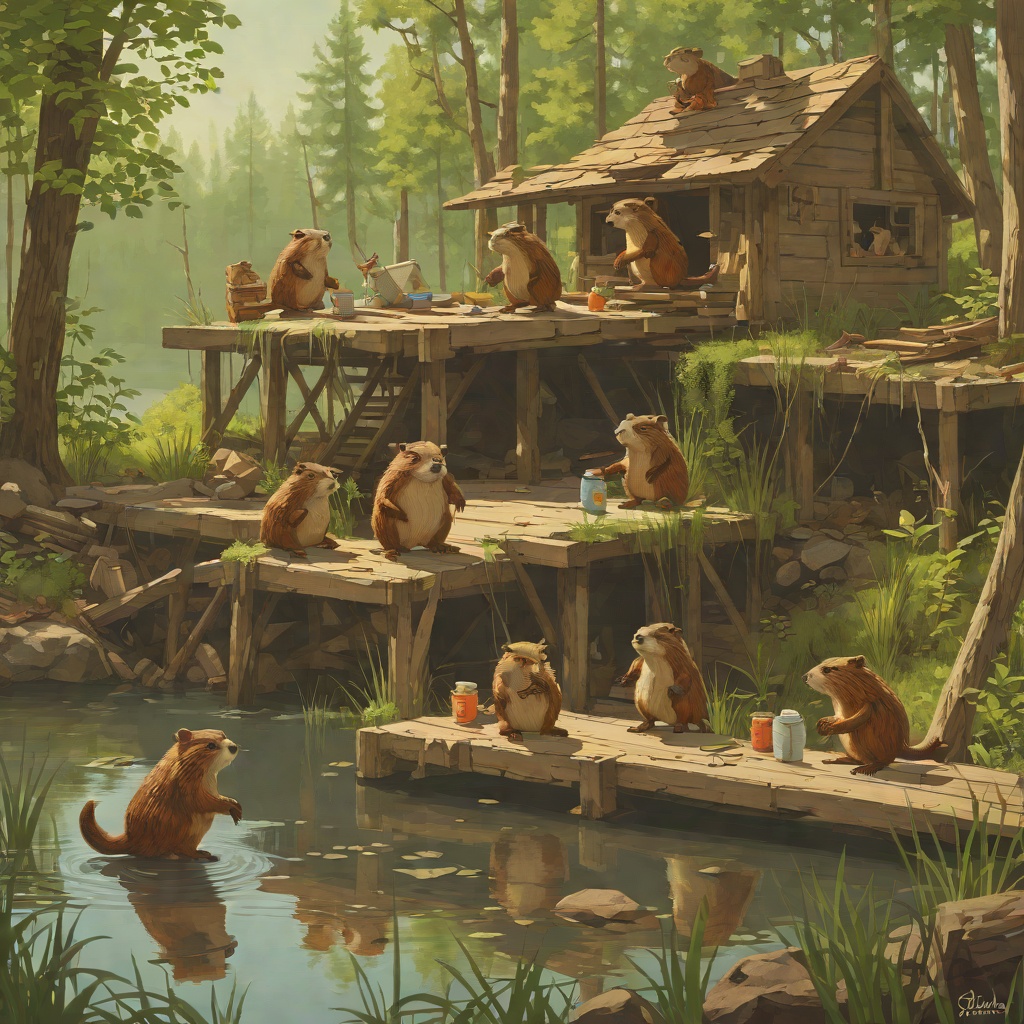
When Roz asks for a home, Mr. Beaver becomes her architect and foreman. Standing at the water's edge, he admits he has built many lodges over the years but never one for a robot and a gosling, and he asks what she needs. Roz specifies a lodge large enough for both of them, comfortable, safe, and near the pond. Mr. Beaver then directs the construction with precise instructions: he asks Roz to dig a trench here, place large stones there, arrange the logs in a certain way, and coat everything with mud in another. Birds and squirrels perch in the trees to watch the new lodge take shape. The result resembles a beaver hut but is larger, a great dome of wood, mud, and leaves, with a simple opening in the wall as an entrance and a heavy stone that Roz can slide aside as a door. Inside, the lodge is a single large round room with a vaulted ceiling tall enough for Roz to stand, a fireplace in the center of the floor, a lattice of fine branches above as a vent, long stones lining the interior walls like benches covered with thick cushions of moss, and even a hole for storing food and water for Brightbill. When the work is done, Mr. Beaver admires the result, calling it a fine property with a view of the pond, and asks Roz what she will name it.
The New Foot
Mr. Beaver's craftsmanship extends beyond architecture to the repair of Roz herself. When Roz is injured and her ability to walk is in question, Brightbill asks whether she will ever walk again. Mr. Beaver, lost in thought, reassures them not to worry and tells them to sit back and let him handle it, declaring that he loves challenges. He dives into the pond and returns rolling a large section of a tree trunk, announcing that Roz should say hello to her new foot. When Roz dutifully greets the new foot, Mr. Beaver approves, explaining that this beauty comes from one of the hardest trees he has ever chewed, and that he just needs to make a few modifications. The wooden foot becomes a permanent part of Roz, a visible symbol of the island's acceptance of her and of Mr. Beaver's role in making her whole again.
The Winter Shelters
Mr. Beaver's influence extends to the wider island through the winter shelter project. When the cold season threatens the animals, Roz crosses the frozen pond to the dense forest on the other side, where Broadfoot the moose lives among many animals desperately in need of a good thaw. Roz tests the ice by throwing a heavy stone and watching it bounce, then walks carefully across and finds Broadfoot waiting. The moose leads her to a clearing where the new lodge will stand, and Roz lights a fire and watches the cold creatures begin to emerge from the shadows. She asks the growing crowd to gather anything useful: large stones, strong branches, pieces of frozen mud. With Roz's construction expertise and a small army of assistants, the second lodge is built quickly, and the animals joyfully accept the robot's truce and drag themselves into the warm wooden dome. Roz warns them to tend the fire carefully, explaining that it will keep them alive but can become deadly in an instant. By dawn, heavy snow is falling again, and Roz leaves the Nest to build a third lodge, then a fourth, then a fifth, trudging through the Great Prairie where violent winds have created enormous drifts. The island becomes dotted with lodges that all glow warmly through the long winter nights, and inside each one, animals laugh, share stories, and cheer for their good friend Roz. While Mr. Beaver is not shown personally building these later shelters, the pattern of construction he established with Roz's first lodge becomes the template for the entire island's survival.
Legacy and Significance
Mr. Beaver's significance lies in his role as the first adult animal to fully accept Roz and to give her the tools to belong. His initial refusal of her gift and his eventual collaboration establish the central pattern of the story: Roz must earn trust through usefulness and respect for the animals' ways. His construction of the lodge gives Roz a home and a place in the island's geography, and his carving of the wooden foot gives her a permanent physical connection to the island's materials. Through his work, Mr. Beaver demonstrates that the island's creatures are not merely passive recipients of Roz's help but active contributors to her transformation. His practical, challenge-loving spirit mirrors Roz's own mechanical problem-solving, and together they build not just structures but a new kind of community where a robot and a gosling can live alongside beavers, moose, and all the other animals of the island.